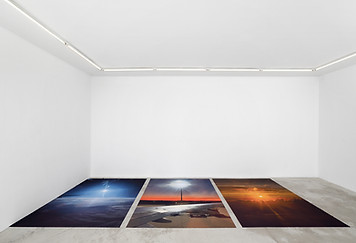
Anti Heroes
Jakob Collection at Villa Merkel
In dialogue with Lukas Jakob
FVTVRIST Magazine // Text by Anna S.
21 April 2026
Lukas Jakob does not collect to own. Over the past decade, working from the edge of the Black Forest near Freiburg, he has assembled around one hundred works. The artists he brings together defined by a philosophical disposition toward doubt, fragility, and the particular clarity that emerges outside dominant narratives. The Jakob Collection is, in this sense, less an archive than an argument in progress.
Anti Heroes, currently on view at Villa Merkel until 7 June 2026, marks the most developed public articulation of that argument. It's dedicated to the question of how art can be collected and communicated beyond the constraints of art historical categories, classifications and market logics. Structured across five thematic chapters and informed by literary references ranging from The Vegetarian to Steppenwolf, the exhibition asks what kind of orientation art can provide in a moment that no longer sustains belief in its heroes. Lukas, who has written extensively on the figure of the antihero, approaches collecting as an intellectual practice.
In this editorial conversation, FVTVRIST speaks with Lukas Jakob about the architecture of the exhibition, the literature that shaped it, the essay that preceded it, and the figure of the antihero as a way of thinking through the present.

PH: Frank Kleinbach © Jakob Collection.
About Anti Heroes
There is a figure that moves through contemporary culture without claiming the centre. It does not triumph or declare. It resists through withdrawal, endures through contradiction, and finds clarity where heroic narratives dissolve. Anti Heroes, on view at Villa Merkel from 8 March to 7 June 2026, is structured around this figure. Drawing from the Jakob Collection and unfolding across five thematic chapters, the exhibition traces a movement from political vulnerability to ecological crisis, from the psychology of the double to bodily resistance and the seductions of commodity culture.
Chapter 1: LOVE LETTER
Chapter 2: BURNING WORLDS
Chapter 3: DOPPELGÄNGER
Chapter 4: BODILY RESISTANCE
Chapter 5: COMMODITY FETISH
Anchored in The Vegetarian, informed by Ulrich Bröckling, and shaped by Jakob’s own writing on the antihero, the show discusses what kind of orientation art can provide in today’s world beset by crises, increased pace, uncertainty and the rise of authoritarian political forces. Most of the works are from the Jakob Collection, with the addition of a few loans. The works shift between self-presentation and failure, power and powerlessness, visibility and withdrawal.


Lukas Jacob, portrait. PH: Joschua Yesni Arnaut . © Courtesy of Lukas Jakob.
Anti Heroes opens at Villa Merkel with a painted tie, your first purchase, made from your first salary. The exhibition begins there, not with a manifesto. What does it mean to let a personal object carry the weight of an intellectual argument?
As a visitor of the collection presentation, one begins at the very beginning of its history with an artist who has fascinated me sustainably through her radical, new and at the same time sensual understanding of painting and installation. The opening of the exhibition is formed by a work by Katharina Grosse. I acquired the painted silk tie with my first salary as an administrative officer at the town hall. As a garment that is worn especially in official contexts, it stands symbolically for the transition between the world of art and the structures of public administration. At the same time, the work also unfolds a special meaning with regard to the exhibition house of Villa Merkel itself: it refers to the interplay of passion, meticulousness and responsibility that accompanies collecting. In the context of the exhibition, the tie can moreover be read as a symbol for the tension between social norms and individual needs, a conflict that also shapes many anti-heroic figures. This parallel between office everyday life and the art world runs like a red thread through the entire exhibition: be it in the tie by Katharina Grosse, in the rolling seat sculptures by Marina Faust, in Gabriella Torres-Ferrer’s engagement with social profiling, the profile shots by Roni Horn, or in Schirin Kretschmann’s data sheet.


1/ Karla Zipfel, Interfassade, Detail, 2019.
2/ Thomas Liu Le Lann, TOY, 2019. PH: Aurélien Mole.
3/ Marina Faust, Rolling Stool #1, 2026 © Marina Faust and Xippas.
4/ Lucas Munoz Munoz, B.A.R.E Series, Single curved Table Lamp, 2021.
© Courtesy of Jakob Collection.

Thomas Liu Le Lann, The first cut is the deepest, 2025. PH: Jiawei Zou
© Courtesy of Jakob Collection.

Tobias Spichtig, Untitled, 2025.
© Courtesy of Jakob Collection.
You structured the exhibition around five chapters, each its own room, each its own question. Did that architecture emerge from the works already in the collection, or did the structure reveal which works belonged?
The division of the exhibition into chapters originally goes back to an idea by Sebastian Schmitt, the director of Villa Merkel. In close exchange, we further developed and specified this structure in order to make different facets of anti-heroism visible. Thus, the exhibition opens with the chapter “Love Letter” as well as political works by Rindon Johnson. In the room “Burning Worlds”, existential and ecological threats move into focus, while “Doppelgänger” assembles classical, often dark anti-hero narratives. “Silent Resistance”, on the other hand, shows quiet, partly cheerful appearing positions that deliberately withdraw. The exhibition is complemented by a mediation space that continuously expands in the form of an anti-heroine library. Two further rooms follow, which deal with questions of art collecting, of value and commodity, as well as with failure as a possible marketing strategy. The structure therefore emerged in dialogue between curatorial idea and the existing works of the collection. It was an exciting challenge to develop these themes from within the collection. At the same time, we also selectively invited artists to contribute loans, not out of lack, but out of the desire to deepen exchange and open new perspectives. Precisely in the joint reflection on the individual rooms, new approaches to the works repeatedly arose for me. “Anti Heroes” is therefore also an exhibition that invites reading, researching and further thinking.
Your collection resists visible systems of classification. Is that a way of concealing structure, or of redefining what a structure can be?
I do not understand the lack of a clear classification as concealment, but rather as a conscious expansion of what structure can be. For me, structure does not arise through rigid categories, but through content-related relationships, tensions and resonances between the works. I am convinced that artists who engage intensively with the pressing questions of our society make an essential contribution to its progress. With my collection, I would like to offer these voices a platform and support them in the long term. Especially in Germany, there is an impressive tradition of significant private collections. For me, the question therefore arises again and again of how, under the conditions of my generation, with its media, perspectives and challenges, a contemporary collection of my own can develop. It is also about depicting a piece of the present. Market logics or pure investment considerations play no role in this. Rather, this exhibition has once again shown me how powerfully art brings people together, creates networks and initiates common discourses that also advance us personally. My collection deliberately assembles the non-conformist, the contradictory, the questioning, those positions that withdraw from simple attributions. In a certain way, I look with great respect at these anti-heroic attitudes, because they generate friction and open new perspectives.


Installation views: Anti Heroes. Jakob Collection, Villa Merkel, Galerie der Stadt Esslingen.
1/ Thomas Liu Le Lann, Evgenij Gottfried, Julian-Jakob Kneer, Neckar Doll, Joschua Yesni Arnaut.
2/ Schirin Kretschmann, Tobias Spichtig.
3/Natacha Donzé, Gabriella Torres-Ferrer.
PH: Frank Kleinbach © Courtesy Jakob Collection.
You wrote a long essay on antiheroes. How does writing shape the way you collect? Does the essay follow the collection, or does it precede it?
Freiburg is strongly shaped by its university, and there was a collaborative research center on hero research here. In this context I attended lectures, among others on artists such as Thomas Liu Le Lann and Jaime Welsh. At the same time, I read Ulrich Bröckling's essay "Postheroic Heroes, A Contemporary Image" and discovered many parallels to the themes that the artists in my collection deal with. From this observation I began to conduct my own research, in direct exchange with researchers, but also through archive and library visits, for example at the ZKM - Center for Art and Media in Karlsruhe. In addition, there were films, literature and again and again impulses from conversations with friends and colleagues, also from music. It was a very organic process. The essay ultimately emerged from this engagement, less as a theoretical foundation in advance, but rather as a reflection and condensation of what had already become apparent in the collection. The art was there first. For me, collecting always includes both: a very social, dialogical process, shaped by encounters and exchange, and at the same time a quiet, almost intimate part, in which I order thoughts, reflect and establish connections. Writing helped me to structure the different facets of the anti-hero, also with regard to my own generation, more clearly and to understand which aspects could still be relevant for the collection. In this sense, the essay also acts like a personal archive, with sources, references and thoughts to which I can return again and again. And at the same time everything remains in motion: it is an ongoing task to continue thinking about the concept, to include new voices and to let the collection grow.
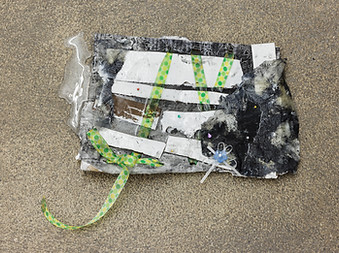
Jasmine Gregory, Better Than Botox, 2023.
PH: Manuel Carreon Lopez © Courtesy Jakob Collection.
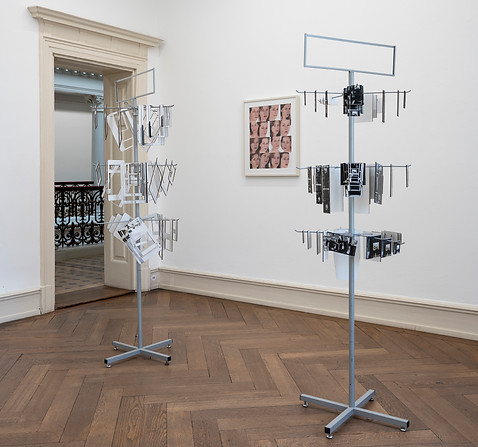
Installation views: Anti Heroes. Jakob Collection, Villa Merkel, Galerie der Stadt Esslingen. Karla Zipfel, Roni Horn.
PH: Frank Kleinbach © Courtesy Jakob Collection.
You've written notes on Hesse's Steppenwolf. Haller doesn't fail society, he outlives its categories. Is that what the antihero ultimately describes: not defeat, but an excess of interiority that existing frameworks can no longer contain?
In Steppenwolf, Harry Haller is a classical anti-hero, not because he simply fails, but because he is no longer connectable to the categories of his time. His tornness between bourgeois existence and radical inwardness makes him into a figure that can neither be clearly located nor stabilized. In this sense, I would say: the anti-hero actually describes less a defeat than rather an excess, a too much of perception, of reflection, of inner polyphony, that overwhelms existing social orders. Haller "survives" these orders by not fully submitting to them, but he pays a high price for this: isolation, crisis, fragmentation. This becomes particularly clear in the motif of the "Magic Theater", this inner experiential space in which Haller's identity dissolves and reassembles itself. It is a place in which contradictions are not resolved, but can be experienced side by side. This idea also accompanied me during the conception of the exhibition. Together with Sebastian Schmitt, we thought the rooms in such a way that they function like stations of such a "magical cabinet", as different experiential spaces in which facets of anti-heroism unfold. However, with a contemporary focus: it is about the ruptures, overstrains and self-designs of my own generation. In this context, I am also interested in the productive side of failure. Not as an endpoint, but as a state in which new perspectives can arise. And perhaps it fits quite well that Hermann Hesse himself had a rather fractured relationship to classical life paths, for example with his apprenticeship as a bookseller in Esslingen am Neckar, which he never took up, where the Jakob Collection is currently being exhibited in the Villa Merkel. These biographical detours in a certain way reflect what his figures also go through: a constant struggle with expectations, roles and one's own inwardness.
The Doppelgänger chapter sits at the centre of the exhibition, between Love Letter and Bodily Resistance. Was that positioning deliberate? What does the double reveal about the chapters that surround it?
Yes exactly, the central placement of the chapter "Doppelgänger" is consciously chosen. It was important to me to give the classical anti-hero its own focus, that is, those figures that undermine familiar heroic narratives. Especially for young people, such stories are important offers of identification, and exactly these are deliberately irritated and broken here. This becomes particularly clear in Thomas Liu Le Lann's series "Eyes Closed". His black-and-white photographs show toy figures in the vitrines of Parisian shops, which appear doubled through reflections and overlap visually. These duplications create a kind of floating state: the figures appear simultaneously present and removed, unambiguous and intangible. What initially appears like a familiar image of heroes shifts into the ambivalent, their moral clarity dissolves. Instead of identification, a quiet unease arises: what hidden sides do these figures carry within themselves? What projections or also dystopias are hidden behind these idealized surfaces? This mood continues in the dark scenography of the room, which emphasizes the dark and extreme facets of the anti-hero. In Neckar Dolls' "About Ordal" we encounter a fallen warrior, staged in a visually heightened, almost ritualistic aesthetic between romanticism and pathos. The work combines motifs of knighthood and risk sport, of longing for death and search for adrenaline, and thus also poses the question why boundary experiences often appear as a prerequisite for feeling alive. This engagement also has a personal dimension for me. In a mediation film by Martin Mannweiler, I can be seen together with my father, who was a bodybuilder, on his motorcycle, I grew up with a strong fascination for the extreme, which resonates here. Also in the room stands the fragile self-portrait by Joschua Yesni Arnaut. His sculpture takes up formal languages of Nazi aesthetics as well as codes of the skinhead and neo-Nazi scene and makes visible how dangerous such offers of identity can be, especially for young people. Against the background of current social developments, the work appears like an urgent warning and questions traditional images of masculinity and heroism.
Thomas Liu Le Lann, Eyes Closed #1, Eyes Closed #2, Eyes Closed #3, Detail, 2024. © Thomas Liu Le Lann and Xippas.
WRITING HELPED ME TO STRUCTURE THE DIFFERENT FACETS OF THE ANTI-HERO, ALSO WITH REGARD TO MY OWN GENERATION, MORE CLEARLY AND TO UNDERSTAND WHICH ASPECTS COULD STILL BE RELEVANT FOR THE COLLECTION. IN THIS SENSE, THE ESSAY ALSO ACTS LIKE A PERSONAL ARCHIVE, WITH SOURCES, REFERENCES AND THOUGHTS TO WHICH I CAN RETURN AGAIN AND AGAIN.
Bröckling describes post-heroic conditions not as weakness but as a different relationship to certainty. When you encountered that framework, what did it clarify about works you had already chosen?
When Bröckling speaks of postheroic times, he means a present in which classical heroic figures are increasingly viewed skeptically, as too pathetic, too unambiguous, often also too strongly shaped by traditional role models. At the same time, the need for figures of identification has by no means disappeared. On the contrary: today it shows itself in more diverse, more contradictory forms, from activists to whistleblowers to figures from pop culture and sport. What became clear to me through Bröckling's considerations: it is less about the disappearance of the heroic than about a shift, towards ambivalent, broken figures. And it is precisely this ambivalence that I recognized again in many works of my collection. Many of the works already carry moments of failure, fragility or even self-destruction within themselves. They negotiate tensions between strength and vulnerability, between pathos and skepticism. Themes such as identity, masking, veiling or also conscious overstrain play a central role. It is precisely this friction that makes the anti-heroic figure so interesting for contemporary artists. In a world that increasingly understands itself as complex and contradictory, flawless heroic figures appear almost implausible. The anti-hero, on the other hand, offers a more open, more honest projection surface, one that allows breaks and does not hide uncertainties, but makes them productive. One can also only be an anti-hero in a moment, like in a crisis. I find that very encouraging.
Han Kang's protagonist in The Vegetarian doesn't argue, she withdraws. She refuses participation as a form of agency. In a cultural moment defined by declarations and positions, do you think refusal has become its own intellectual stance?
The figure in Han Kang's The Vegetarian occupied me precisely because her resistance is not loud or argumentative, but quiet, consistent and radically physical. She withdraws, and precisely in that lies her agency. Karin Janker described this very aptly in the Süddeutsche Zeitung: the plant becomes here the counter-image to the classical hero, passive, silent, and yet of great consequence. This form of refusal irritates because we live in a present that is strongly shaped by positionings, opinions and visibility. All the more exciting it is when a figure completely withdraws from this system. One could say: refusal here indeed becomes its own intellectual stance, one that does not function through language, but through withdrawal, reduction and consequence. This also recalls literary figures such as Bartleby, whose "I would prefer not to" formulates a similar form of radical passivity, with existential consequences. This stance is ambivalent: it can be read as self-empowerment, but also as a form of isolation or failure. Interestingly, I also encounter this form of silent resistance in contemporary art. For example with Annette Merkenthaler, whose works allow natural growth processes and consciously relinquish control, or with Marina Faust, whose Rolling Stools withdraw from clear attributions and oscillate between function, play and irritation. Visitors are invited to move through the exhibition while sitting on them. These works refuse unambiguity, and precisely therein lies their power. At the same time, one must not forget that refusal also has a long political tradition. The African American Rosa Parks, for example, triggered an enormous social movement with a single, quiet refusal to stand up on the bus for a white woman. This shows that withdrawal or non-action are not necessarily passive, but can be highly effective. In this field of tension also moves the figure of the anti-heroine in Han Kang: between personal withdrawal and political dimension. Refusal becomes here a stance that cannot be appropriated, and precisely for that reason is so relevant.
The Doppelgänger appears across the exhibition as a recurring structure, doubling, mirroring, the self encountering itself from the outside. What does that motif allow you to express that a single figure cannot?
Reflections and duplications appear again and again in the exhibition because they make a central characteristic of the anti-hero visible: ambivalence. While classical heroes are often unambiguous, anti-heroes carry contradictions within themselves, and this can be represented particularly well through the motif of the doppelgänger. The exhibition assembles alter egos, doppelgängers and figures to whom, in a certain sense, a part of themselves has been withdrawn. They stand for inner tornness, for the feeling of facing oneself or no longer recognizing oneself in one's own image. One example is the work by Jaime Welsh, who in "The Ambassador's Suite (revisited)" doubles the image of a child and thus creates the illusion of twins or clones. Reality and fiction begin to blur, and at the same time the fragility of our perception becomes visible. This duplication is embedded in an architecture from the time of the Salazar dictatorship in Portugal, whereby questions of power, powerlessness and historical memory are also inscribed. The mirror is not only a means of duplication, but also a symbol of self-perception. In the context of the anti-hero, this can often be read in the field of tension between narcissism and self-staging. Thus, for example, Julian-Jakob Kneer works in his self-portraits with a silicone mask that imitates his own face. This artificial duplication makes it possible for him to build distance from himself, from his own opinions, emotions and role models. From this emerges an ambivalent figure between self-control and self-loss, which also touches on questions of celebrity culture and self-destruction. This double structure also becomes visible in the series "BASTARDS": through the collage of different film posters, from horror and children's films, an irritating overlay emerges that shows how permeable the boundaries between good and evil are. The doppelgänger here is less a second figure than rather an indication that we always also carry these opposites within ourselves. Not least, this motif continues in the mediation space, which we created together with Sebastian Schmitt as a kind of archive. Mirrors meet the visitors there quite directly, provided with quotations from anti-hero narratives. The books themselves, which I partly gathered from antiquarian bookshops, are presented on mirrored surfaces. In this way, the viewers literally become part of this structure: they encounter themselves in the context of the stories and figures. The doppelgänger therefore makes something possible that a single figure can hardly achieve: it makes inner contradictions visible, externalizes conflicts and opens a space in which identity appears not as fixed, but as fragmented and negotiable.


Installation views: Anti Heroes. Jakob Collection, Villa Merkel, Galerie der Stadt Esslingen.
1/ Rindon Johnson, Gabriella Torres-Ferrer. PH: Daniela Wolf.
2/ Marina Faust, new candidate, 2022.
3/Annette Merkenthaler. PH: Frank Kleinbach.
4/ Natacha Donzé, Memory resident (yellow), 2024. PH: Romain Darnaud.
© Courtesy Jakob Collection and Annette Merkenthaler.
Do you see antiheroism as a shared condition, or does it shift depending on who is allowed to occupy it?
First of all, one can neither appoint oneself as a hero nor as an anti-hero, these roles always arise through attribution, that is, through how others perceive and narrate actions. What became particularly clear to me in the course of my research: anti-heroism is not a stable condition. It is rather something situational, something that shifts, depending on perspective, context and also depending on who even has the possibility of being read as an anti-hero. What is interesting here is that the anti-hero often exists only for a moment. A figure can change, can fail, be contradictory, and precisely therein lies its potential. In Steppenwolf, for example, at the end there is a form of realization or rather an acceptance of one's own contradictoriness. And precisely in this, for me, lies something surprisingly hopeful within an otherwise rather dark theme.
Several artists in the collection, Rindon Johnson, Miriam Cahn, Joschua Yesni Arnaut, work from positions of direct exposure: political, bodily, historical. How does your essay account for the difference between antiheroism as a philosophical position and antiheroism as a lived condition?
I have great respect for these artists, who give us such immediate insights into their inner states, their family histories and also their vulnerability. These works are not abstract propositions, but are often existentially shaped, and precisely therein lies their power. For my essay it was important to distinguish between anti-heroism as a theoretical or aesthetic figure and as lived reality. Because while the anti-hero in theory often appears as a tension-rich, ambivalent figure, this ambivalence is for many artists real experience: shaped by political exposure, social pressure or bodily vulnerability. What particularly interests me here are narratives of failure. From them one can often learn more than from classical success stories. Both in life and in art. A "difficult" work that produces resistance often has more profile than a seemingly flawless one. At the same time, with these very personal narratives, caution is also required: not everything that appears autobiographical to us can be clearly read as such. This becomes clear, for example, in Thomas Liu Le Lann, whose works often play with autofiction. His narratives consciously move in an intermediate area of reality and staging. In the work "TOY", for example, playful elements, like a glass sphere that recalls a play ball, meet an irritating corporeality. The pair of eyes, which recalls manga aesthetics, at the same time evokes the idea of a hero mask. Here anti-heroism becomes visible less as lived experience, but rather as image, as projection, as something that constantly withdraws. In contrast to this stand works such as those by Rindon Johnson, which emerge much more directly from a lived reality. Johnson's practice is closely connected with questions of identity, belonging and exclusion. In the video work "I First You (11/11)", realized together with Milo McBride, a floating digital landscape unfolds in which voices tell of closeness, loss and political upheaval. The text emerged on the day of Donald Trump's election victory in 2016 and makes the vulnerability of queer existences in a concrete political moment tangible. Precisely in this juxtaposition, for me the difference becomes clear: anti-heroism can be an aesthetic strategy, but for some it is also lived reality, with real consequences.ou to think throubefore you could fully receive it?
Which work in the collection demanded the most from you intellectually, not emotionally, but in terms of what it required you to think through before you could fully receive it?
That was the floating cloud installation by Gabriella Torres-Ferrer. Among other things, it takes up themes such as Hurricane Maria in Puerto Rico, events that I had not previously had on my radar in this depth. What makes the work so demanding is that it does not immediately reveal itself. At first it rather irritated me, and I needed time to really penetrate its content-related and formal levels. But precisely this irritation was productive: it forced me to engage more intensively with the political and historical backgrounds. In the meantime, the relevance of the addressed themes has once again increased significantly, as the crisis and the ongoing injustices in Puerto Rico have become increasingly visible globally after Bad Bunny's Super Bowl appearance. Torres-Ferrer's work therefore appears almost anticipatory. In exchange with TF, new perspectives on the installation repeatedly open up for me. I find it remarkable and also courageous how early TF placed these themes at the center of artistic practice. Torres-Ferrer's participation in the exhibition no existe un mundo poshuracán: Puerto Rican Art in the Wake of Hurricane Maria at the Whitney Museum in 2022 once again brought this engagement more strongly into public awareness.
The antihero, as you have constructed it across the essay, the rooms, the library, is a figure who perceives clearly in conditions of uncertainty. If that figure is the one your collection has been quietly assembling, what kind of world is it assembling them for?
Anti-heroes often do not fit into the world in which they exist, a world that is shaped by contradictions and injustices. Especially my generation, Gen Z, grows up with a permanent feeling of global crises: climate change, pandemic, economic uncertainty and the real concern about new wars. The collection therefore assembles these figures not as a solution, but as a mirror. In many places, the works invite to concrete moments of reflection, about good and evil, about art and pop, about value and commodity. They form less a closed narrative than rather a network of perspectives. In this sense, the works reflect not only my collection, but also a collective feeling of life: a present in which the heroic is increasingly deconstructed, broken or performed. The anti-hero thus becomes a central figure of our time, not because it provides orientation, but because it endures ambivalence. Perhaps that is exactly the world for which this collection assembles its figures: a world that no longer waits for redemption, but recognizes failure as part of the human, in all its fragility.

Neckar Doll, About Ordal, 2018. © Courtesy Jakob Collection.
About Lukas Jakob
Lukas Jakob collects from a position few institutions occupy. Based near Freiburg im Breisgau and working within public administration, he has spent the past decade building a collection that moves beyond the categories of art history and the valuations of the market. Around one hundred works across painting, sculpture, photography, installation, and media art are brought together through a shared logic: a sustained attention to doubt, fragility, and the particular intelligence of figures operating outside dominant narratives. His focus on emerging artists from the tri-border region of Germany, France, and Switzerland is not regionalism but precision, a way of observing artistic thinking as it takes form.
Lukas Jakob writes about what he collects. He reads before he acquires. The collection unfolds alongside the essay, the argument, the question that precedes the work on the wall.

_2025_102%20x%2091%20cm_1.jpg)