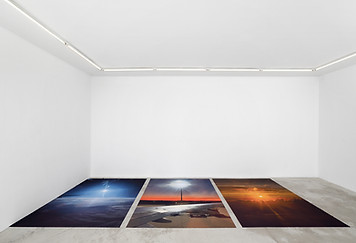
Pouring Shadows
In dialogue with Jay Khan
FVTVRIST Magazine // Text by Anna S.
6 April 2026
20 March — 20 May 2026
Location: Sin Sin Fine Art.
Wong Chuk Hang, Hong Kong
The exhibition Pouring Shadows opened at Sin Sin Fine Art in Wong Chuk Hang, positioning Jay Khan’s practice within one of Hong Kong’s most dynamic cultural districts. Conceived as a tightly focused body of work, the exhibition frames the city as a shifting condition.
FVTVRIST spoke with Jay Khan on perception, chance, and the construction of attention through black and white photography.

Gasman
Archival Pigment Print on Hahnemühle Fine Art Paper
22 x 27.5 cm
2024, Limited Edition of 10
© Courtesy of the artist and Sin Sin Fine Art.

Jay Khan, portrait © Courtesy of the artist.
Exhibition focuses entirely on Hong Kong. What led you to concentrate exclusively on this city?
I travel a lot and have photographs from all around the world, but for this show I wanted to focus only on Hong Kong. It felt important to isolate that environment and look at it more closely. There is something very specific in the rhythm of the city, in how people move, how light behaves between buildings, how moments appear and disappear. This exhibition is about capturing that atmosphere. It is a mix of works from 2024 and 2025, some older images and some very recent ones, but all connected by this focus on Hong Kong.

Graveyard Shift
Archival Pigment Print on Hahnemühle Fine Art Paper
26 x 45.49 cm
2024, Limited Edition of 10
© Courtesy of the artist and Sin Sin Fine Art.

Foggy Victoria Harbour
Archival Pigment Print on Hahnemühle Fine Art Paper
26 x 51.69 cm
2022, Limited Edition of 10
© Courtesy of the artist and Sin Sin Fine Art.

Morning Walk
Archival Pigment Print on Hahnemühle Fine Art Paper
100 x 50.1 cm
2022, Limited Edition of 10
© Courtesy of the artist and Sin Sin Fine Art.
The title Pouring Shadows suggests a very precise relationship to light. How do you approach light in your work?
Light is everything, especially because I work in black and white. There is no colour, so you have to build interest through contrast, through shadows, through different shades of grey. If a photograph has no shadow, it can become flat, almost too simple. But when the light is right, when shadows stretch or fall in a certain way, the image gains tension. Sometimes I wait a long time for this. The sun has to be in the right place, or a single light source has to isolate a person from the darkness around them. These small variations completely change the image.
Many of your works rely on what you describe as “candid moments.” Why is this so central to your practice?
For me, the moment disappears as soon as the subject becomes aware of the camera. If they know they are being photographed, the image becomes staged, even if unintentionally. I try to remain invisible. I often walk very close to people with a wide-angle lens, take the shot, smile, and leave. Sometimes I shoot from the hip so they don’t even realise. There is a kind of honesty in that. You capture something that is not performed, something that belongs entirely to that instant.

Leaping Through Light
Archival Pigment Print on Hahnemühle Fine Art Paper
22 x 33 cm | Framed 37 x 48 cm
2025, Limited Edition of 10
© Courtesy of the artist and Sin Sin Fine Art.
There is also a strong sense of patience in your process. You often speak about “waiting.”
Yes, waiting is essential. I sometimes stay in one place for twenty minutes, even an hour, just to get a single image. In black and white, if there are too many elements overlapping, the image becomes chaotic. So I wait for simplicity. I wait for one person to pass, for the frame to clear, for something precise to happen. We sometimes call it “fishing.” You wait for a rare moment, and when it appears, you have to be ready.
One of your images creates the illusion of a single figure reflected in a mirror, which is in fact two different people. What interests you in this kind of visual ambiguity?
That image is about perception. At first glance, it looks like one person looking at himself, but it is actually two separate individuals. Because their gestures are so similar, the mind connects them into a single figure. People only realise the difference when they look more closely. I like this idea that an image can reveal itself slowly, that it asks the viewer to spend time with it.
Your work often reveals layers within a single frame. How do you construct this complexity?
I am drawn to images where there are multiple layers, where something is happening in the foreground, the background, and sometimes in between. For example, during blue hour, when lights begin to appear in the city, you can create depth through light trails, architecture, and movement. These are the kinds of images that reward attention. The longer you look, the more you discover.

GEOMETRY GIVES STRUCTURE TO CHAOS. CITIES ARE FULL OF LINES, BUILDINGS, REPETITIONS. IN BLACK AND WHITE, THESE ELEMENTS BECOME EVEN MORE PRONOUNCED. THEY CREATE A KIND OF SKELETON FOR THE IMAGE.
There is a strong element of unpredictability in your process. How do you relate to chance?
You never know what you are going to get. That is the beauty of it. Sometimes you take a shot very quickly and assume it will not work, maybe it is out of focus, maybe the moment was too fast. And then later you realise it is perfect. You have to trust instinct. When you see something, you go for it.
Geometry appears as a silent framework in your compositions. What role does it play?
Geometry gives structure to chaos. Cities are full of lines, buildings, repetitions. In black and white, these elements become even more pronounced. They create a kind of skeleton for the image. But I always wait for a human presence to enter that structure. Without that, it feels incomplete.

Light & Shaddow / Steps to Serenity
Archival Pigment Print on Hahnemühle Fine Art Paper
2025, Limited Edition of 10
© Courtesy of the artist and Sin Sin Fine Art.

Illusion
Archival Pigment Print on Hahnemühle Fine Art Paper
26 x 39 cm
2025, Limited Edition of 10
© Courtesy of the artist and Sin Sin Fine Art.
We learned that you are colourblind. How does this condition influence your artistic language?
Being colourblind naturally pushed me towards black and white. It removes something I cannot fully rely on and allows me to focus on what I can control completely: light, shadow, composition, timing. In a way, it simplifies the image but also makes it more demanding. Every element has to work without the support of colour.
Finally, how do you see this body of work in relation to the future of Hong Kong?
I think these images are already a kind of archive. Not in a nostalgic sense, but as a record of moments that are constantly disappearing. Cities change very quickly. Behaviours change, light changes, even the way people occupy space changes. This work is about paying attention now, but it also inevitably becomes something that speaks to what will no longer be visible later.

Siesta In Hong Kong
Archival Pigment Print on Hahnemühle Fine Art Paper
22 x 33 cm | Framed 37 x 48 cm
2025, Limited Edition of 10
© Courtesy of the artist and Sin Sin Fine Art.
About Jay Khan
Jay Khan is a Hong Kong–based photographic artist whose practice unfolds through a sustained engagement with the city’s shifting visual and cultural landscape. Working exclusively in black and white, shaped in part by his colourblindness, Khan develops a precise visual language grounded in contrast, geometry, and temporal sensitivity. Parallel to his artistic practice, he is the co-founder of COA, one of Asia’s most recognised bars. This duality informs his approach, where balance becomes both method and philosophy, navigating between intensity and restraint, the external rhythm of the city and an interior mode of perception.
About Sin Sin Fine Art
Sin Sin Fine Art is a Hong Kong–based gallery situated in Wong Chuk Hang, a district that has emerged as a critical node within the city’s evolving contemporary art landscape. The gallery positions itself at the intersection of local and international practices, foregrounding artists whose work engages with perception, materiality, and the shifting conditions of contemporary life.
With a program that moves between emerging and established voices, Sin Sin Fine Art operates as a space of encounter rather than presentation, privileging dialogue, experimentation, and curatorial precision. Its exhibitions often resist spectacle, instead cultivating an attentive mode of viewing that aligns with broader transformations within Hong Kong’s cultural ecosystem.